


How Do Temporary Staffing Solutions Benefit an Organization?
Temporary staffing solutions benefit organizations by managing workforce needs by providing flexible hiring, cost control, and quick access to skilled talent without long-term commitments.
Temporary staffing provides a practical alternative to permanent hiring by supplying qualified workers for short-term, project-based, or seasonal roles. Organizations can reduce payroll pressure, benefit costs, and administrative workload while maintaining productivity and operational efficiency. These solutions are ideal for covering employee absences, handling peak workloads, supporting business expansion, or managing uncertain market conditions. With scalable staffing options and faster hiring processes, temporary staffing helps organizations stay agile and competitive.
This blog explains how temporary staffing solutions benefit organizations and provides a cost-savings breakdown.
Let’s go straight into more discussion!
| Business insights research on the global temporary staffing market was valued at USD 512.42 billion in 2026, with a projected CAGR of 7.4% from 2019 to 2026. This growth reflects the increasing reliance of organizations across industries on flexible workforce solutions to support expansion, seasonal demands, and project-based work. |
Focus Points:
-
- Temporary staffing solutions provide workforce flexibility for changing business demands.
- Organizations reduce costs on salaries, benefits, recruitment, and training by 20–30% compared to permanent hiring.
- Temporary workers help maintain productivity during seasonal peaks and employee absences.
- Businesses gain access to skilled and specialized talent without long-term commitments.
- Staffing agencies reduce administrative and compliance workload, saving HR teams up to 40% of hiring time.
- Temporary staffing supports scalable growth and long-term workforce planning.
What Is a Temporary Staffing Solution?
A temporary staffing solution allows an organization to hire employees for a limited period, ranging from a single day to several months or project durations. These workers may be hired directly or through a professional temporary staffing agency. This approach helps businesses respond quickly to changing operational demands.
Key Facts About Temporary Staffing:
- Temporary roles can last from one day to several months
- Over 35% of temporary workers receive permanent job offers
- About 66% of workers accept permanent positions after temporary assignments
- Temporary staffing supports business continuity during employee absences
Why Do Organizations Use Temporary Staffing Solutions?
Organizations use temporary staffing solutions to handle sudden workload increases without overburdening permanent employees. Our approach helps maintain productivity during seasonal demand, special projects, or unexpected staff shortages efficiently.
Temporary staffing solutions also help organizations control operational costs. By hiring temporary employees, businesses reduce long-term salary commitments, benefit expenses, and recruitment overhead while still accessing skilled professionals when needed.
Another reason organizations choose temporary staffing is flexibility during uncertainty. Temporary roles can be scaled up or down easily, helping businesses to adapt to market changes while protecting their core workforce and operations.
7 Effective Benefits of Temporary Staffing Solutions for an Organization
Temporary staffing solutions provide organizations with flexible, cost-efficient, and productive workforce options. They allow businesses to meet short-term demands, reduce administrative burdens, and maintain operational efficiency without committing to long-term employment contracts.
Here’s a detailed breakdown of the key benefits for organizations:
1. Flexible Workforce to Meet Business Demands
Temporary staffing allows organizations to adjust workforce size in response to workload quickly. Companies can hire professionals for seasonal peaks, short-term projects, or employee absences, ensuring productivity remains high without overburdening permanent staff. Flexibility helps businesses respond to market changes efficiently and maintain smooth operations.
2. Cost Savings on Salaries and Benefits
- Temporary employees reduce long-term salary commitments and benefit expenses.
- Organizations can avoid costs such as healthcare, retirement plans, and paid leave for short-term hires.
3. Reduced Recruitment and Training Expenses
Staffing agencies handle the recruitment, screening, and onboarding of temporary employees, saving organizations time and administrative effort. Temporary employees often have prior experience, reducing training requirements and the learning curve. This helps businesses to focus on core operations while agencies efficiently manage workforce logistics.
4. Maintain Productivity During Employee Absences
- Temporary staffing covers gaps caused by vacation, parental leave, or illness.
- Workflows remain uninterrupted, ensuring consistent adherence to deadlines.
- Permanent employees are not overburdened, maintaining overall workplace morale.
- Business operations continue smoothly even during unexpected staff shortages.
5. Access to Specialized Skills
Temporary staffing provides access to professionals with niche skills for specific projects. Organizations can leverage expertise without long-term hiring commitments. This is ideal for tasks that require specialized knowledge or technical skills. Hiring temporary specialists ensures high-quality work while maintaining flexibility.
6. Minimized Administrative and Legal Burden
- Staffing agencies handle contracts, payroll and compliance with labor laws.
- Organizations reduce administrative tasks and legal risks related to temporary employees.
- Ensures adherence to employment regulations while saving HR time.
- Simplifies workforce management and prevents potential legal complications.
7. Supports Business Growth and Expansion
- Temporary staffing allows organizations to take on new projects quickly.
- Enables businesses to enter new markets without hiring permanent staff.
- Provides flexibility to experiment with workforce scaling before long-term commitments.
- Helps organizations remain agile, competitive, and cost-efficient in dynamic markets.
Final Overview: By offering flexibility, cost savings, reduced administrative burden, and access to skilled talent, temporary staffing solutions help organizations stay agile, productive, and competitive. They are an ideal strategy for businesses seeking efficiency without long-term commitments.

Cost Savings Breakdown of Temporary Staffing Solutions
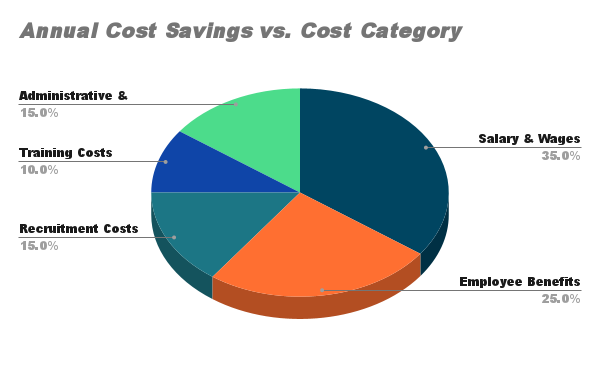
This table shows the percentage cost reduction in certain sectors by using temporary staffing:
| Cost Category | Annual Cost Savings (%) |
| Salary & Wages | 35% |
| Employee Benefits | 25% |
| Recruitment Costs | 15% |
| Training Costs | 10% |
| Administrative & Compliance Costs | 15% |
Why Choose PayrollBangladesh Temporary Staffing Solutions?
PayrollBangladesh’s temporary staffing solutions help organizations quickly address workforce gaps while maintaining compliance with local labor regulations. We provide reliable, pre-screened talent that supports productivity without the risk of long-term hiring commitments.
Our temporary staffing services reduce recruitment, payroll, and administrative burdens by handling sourcing, screening, contracts, and compliance. Businesses save time and costs while focusing on core operations and growth priorities.
With industry-specific expertise and scalable staffing models, PayrollBangladesh supports seasonal demand, project-based needs, and rapid expansion. Our flexible solutions ensure continuity, workforce stability, and cost control for organizations operating locally or globally.
Final Thought
Temporary staffing solutions have become a strategic advantage for organizations seeking flexibility, efficiency, and cost control. By addressing short-term workforce needs, reducing administrative pressure, and maintaining productivity, temporary staffing supports smooth operations in both stable and uncertain business conditions.
With the right staffing partner, organizations can access skilled talent, stay compliant, and scale their workforce confidently. Temporary staffing is no longer just a short-term fix—it is an innovative workforce strategy that helps organizations remain agile, competitive, and prepared for sustainable business growth.
Frequently Asked Questions
Temporary employees may be eligible for certain benefits depending on working hours, contract duration, and local labor laws. Employers must correctly classify temporary workers to remain compliant with regulations.
Yes, many organizations use temporary staffing as a trial period. A significant percentage of temporary workers receive and accept permanent job offers based on performance and business needs.
Yes, temporary staffing is ideal for small businesses because it offers flexibility, cost control, and access to skilled workers without long-term hiring risks or heavy HR responsibilities.
Temporary staffing can fill administrative, technical, operational, project-based, and specialized roles across industries. It is suitable for both entry-level and skilled professional positions.